AI Chatbot for Ecommerce: How to Turn Browsers into BuyersE-ticaret İçin AI Chatbot: Gezinenleri Alıcıya Nasıl Çevirirsiniz
Ecommerce chatbots have quietly stopped being a support tool and started becoming a conversion lever. This post breaks down what a modern ecommerce chatbot actually does, recovering abandoned carts, answering pre-purchase questions, surfacing the right product, and why the conversion lift often dwarfs the support savings. If you're still treating chatbots as a cost center, you're leaving the revenue case on the table.E-ticaret Chatbot'ları sessizce bir destek aracı olmaktan çıkıp bir dönüşüm kaldıracına dönüştü. Bu yazı, modern bir e-ticaret Chatbot'unun gerçekte ne yaptığını, terk edilmiş sepetleri geri kazanma, satın alma öncesi soruları yanıtlama, doğru ürünü öne çıkarma, ve dönüşüm artışının çoğu zaman destek tasarruflarını gölgede bıraktığını parçalıyor. Hâlâ Chatbot'ları bir maliyet merkezi olarak görüyorsanız, gelir gerekçesini masada bırakıyorsunuz.
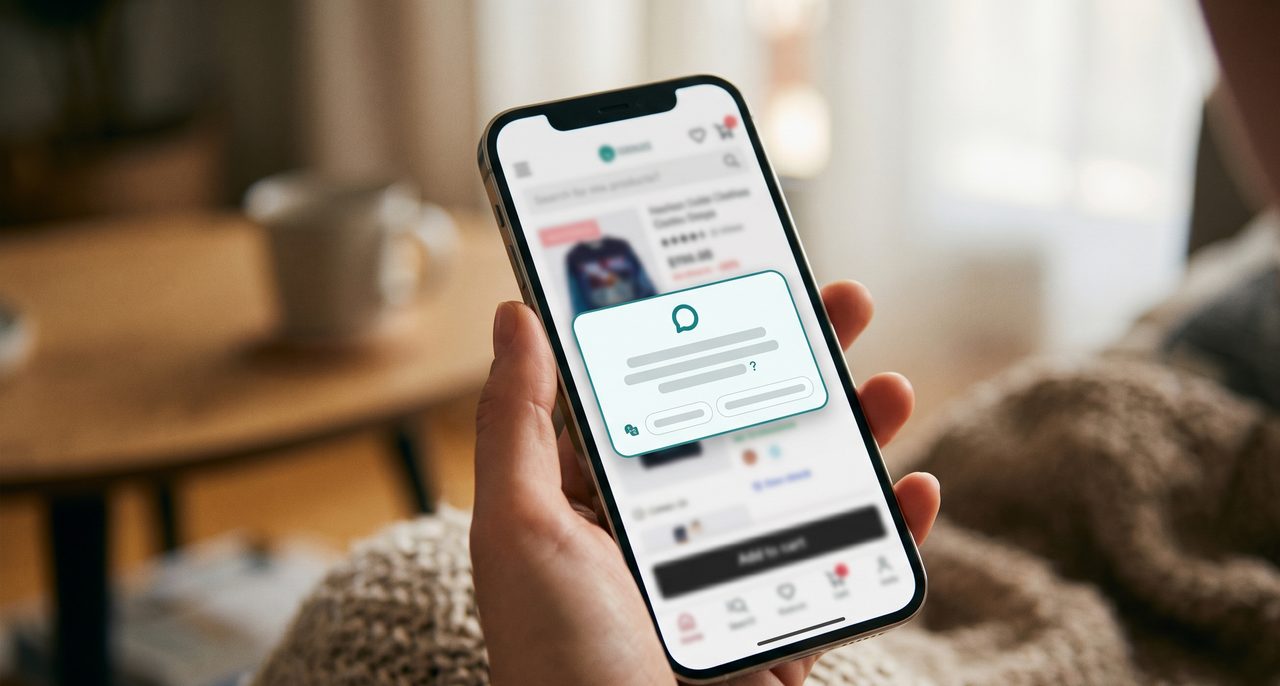
Ecommerce conversion rates have barely moved in a decade. Most stores still convert 1–3% of visitors, and the other 97% leave with questions in their heads, about sizing, shipping, returns, compatibility, materials, stock, that the product page didn't quite answer.
That gap is exactly where AI chatbots earn their keep on an ecommerce site. Not as a generic support tool, but as a sales assistant that lives next to the buy button and answers the question that's actually blocking the purchase.
This is one of the highest-leverage chatbot deployments in 2026, and it's also one of the easiest to get wrong.
What Ecommerce Visitors Are Actually Asking
If you read your live-chat transcripts or your search-bar logs, you'll see the same patterns over and over:
- "Will this fit a [specific] [size/device/setup]?"
- "How long until I get it?"
- "What's the return window?"
- "Do you ship to [country]?"
- "Is this in stock in [color/size]?"
- "What's the difference between [Product A] and [Product B]?"
Most of these are answered somewhere on your site, but the visitor doesn't want to hunt for them. They want the answer in two seconds. If they don't get it, they bounce, and they almost never come back.
A well-trained chatbot turns those questions into answered questions. And answered questions convert dramatically better than unanswered ones.
The Conversion Math
A baseline ecommerce site might see 4–6% of visitors engage a chatbot if it's offered. Of those engaged sessions, conversion rates typically run 1.5–3× the site average. That's not a vanity stat, it's that the people willing to ask a question are higher-intent in the first place, and they're getting their friction removed.
A back-of-envelope model:
> Lift revenue = (Sessions engaged × incremental conversion rate × AOV)
On 100,000 monthly visitors with a 5% engagement rate and a 1.5-percentage-point conversion lift on engaged sessions at an $80 AOV, you're looking at about $6,000 of incremental monthly revenue from conversation alone, separate from any support savings. We work through the full ROI picture in the chatbot ROI breakdown.
The lift is highest in three categories: apparel (sizing questions), consumer electronics (compatibility), and high-AOV products (price-justification questions). If you sell in any of those, the conversion case is strong.
What Separates a Sales Chatbot from a Support Chatbot
A support chatbot answers questions. A sales chatbot answers questions and moves the user forward. The difference shows up in a few places:
Product knowledge depth. A sales chatbot needs to know your full catalog, specs, materials, dimensions, compatibility, at the level of detail a product expert would. Generic FAQ-style chatbots fail here. You need proper retrieval-augmented generation over the actual product data, not just a help-center scrape.
Recommendation logic. When a user asks "which one's right for me?" the bot should be able to ask 1–2 clarifying questions and then point at a specific SKU with reasoning. This requires structured product data, not just descriptions.
Gentle nudges, not aggressive pushes. Bad sales bots feel like a pushy salesperson. Good ones feel like a knowledgeable friend. The tone tuning matters more than the model choice.
Handoff for high-AOV moments. When a visitor is mid-conversation about a $4,000 purchase, sometimes the right move is to hand off to a human, fast, with full context. The bot's job there is to qualify the lead and warm the handoff, not to close.
The Common Failure Modes
A few patterns that quietly tank ecommerce chatbot deployments:
1. The bot doesn't know stock or pricing. If your product database isn't connected, the bot will give stale answers and lose trust within a session.
2. Hallucinated specs. A chatbot that confidently invents a TV's HDMI port count is going to generate returns. This is exactly the failure mode covered in why AI chatbots hallucinate, and it's especially dangerous for ecommerce.
3. No handoff logic. Real complaints, damaged orders, delivery issues, fraud, need a human. A bot with no clean escalation path will make these worse.
4. Treating the chatbot like a generic widget. The chatbots that win are tuned to your brand voice, your catalog, your typical customer questions. The ones that lose are dropped in with default settings and never adjusted.
We track which of these failure modes are showing up using the seven KPIs every chatbot team should watch.
Where to Place It on the Page
Placement matters more than people expect:
- Product detail pages: high-impact. Most pre-purchase questions live here.
- Cart/checkout: high-impact for shipping and return questions, but be careful, anything that distracts from the buy button can hurt.
- Category/landing pages: useful for "help me choose" interactions.
- Order tracking pages: where post-purchase support lives.
A common mistake is making the chatbot a sticky-corner widget that triggers nowhere in particular. Better deployments customize the opening prompt by page context, "Looking at the X35? I can help with sizing or compatibility."
Why "AI Chatbot vs Live Chat" Isn't the Right Question
For high-volume ecommerce, the real choice isn't whether to use a chatbot, it's how to combine it with humans. The chatbot handles the 90% of questions that are answerable from your existing content, and the human team handles the 10% that need judgment, complaint resolution, or sales finesse. We covered the broader comparison in AI chatbot vs live chat: which converts better?.
The wrong question: "do I want a bot or a human?" The right question: "where exactly does the bot end and the human begin, and how is that transition handled?"
How Solvara Approaches Ecommerce
When Solvara builds a chatbot for an ecommerce store, we ingest the full catalog, the help center, the shipping and returns policies, and any existing FAQ content. We tune the answer logic to be product-aware, the bot doesn't just retrieve text, it understands which SKU the conversation is about. And we wire in clean handoff to your human team for the moments that matter.
Most deployments are live within a week. See the customer-facing product on the website chatbot page, or book a free demo to see what it would look like on your own catalog.
The simplest test: would a knowledgeable human standing next to the product page sell more of it? If yes, a well-trained chatbot can do the same, at a fraction of the cost, 24/7, in every language your customers speak.
E-ticaret dönüşüm oranları on yıldır neredeyse hiç kıpırdamadı. Çoğu mağaza ziyaretçilerinin hâlâ %1–3'ünü dönüşüme çeviriyor ve diğer %97, beden, kargo, iade, uyumluluk, malzeme, stok hakkında, ürün sayfasının tam olarak yanıtlamadığı sorularla siteden ayrılıyor.
İşte AI Chatbot'lar bir e-ticaret sitesinde ekmeklerini tam olarak bu boşlukta çıkarıyor. Jenerik bir destek aracı olarak değil, satın al butonunun yanında duran ve satın almayı gerçekten engelleyen soruyu yanıtlayan bir satış asistanı olarak.
Bu, 2026'daki en yüksek kaldıraçlı Chatbot devreye almalarından biri ve aynı zamanda en kolay yanlış yapılanlarından biri.
E-ticaret Ziyaretçileri Gerçekte Ne Soruyor?
Canlı sohbet kayıtlarınızı veya arama çubuğu loglarınızı okursanız, aynı kalıpların defalarca tekrar ettiğini görürsünüz:
- "Bu [belirli] [bedene/cihaza/kuruluma] uyar mı?"
- "Ne kadar sürede elime geçer?"
- "İade süresi nedir?"
- "[Ülkeye] kargo yapıyor musunuz?"
- "Bu, [renkte/bedende] stokta var mı?"
- "[A Ürünü] ile [B Ürünü] arasındaki fark nedir?"
Bunların çoğu sitenizde bir yerde yanıtlanmıştır, ama ziyaretçi onları aramak istemez. Yanıtı iki saniyede ister. Alamazsa siteden çıkar, ve neredeyse hiç geri dönmez.
İyi eğitilmiş bir Chatbot bu soruları yanıtlanmış sorulara dönüştürür. Ve yanıtlanmış sorular, yanıtlanmamış sorulardan dramatik biçimde daha iyi dönüşüm sağlar.
Dönüşüm Hesabı
Standart bir e-ticaret sitesi, sunulduğunda ziyaretçilerinin %4–6'sının bir Chatbot ile etkileşime girdiğini görebilir. Etkileşim kuran bu oturumlarda dönüşüm oranları tipik olarak site ortalamasının 1,5–3 katı olur. Bu bir gösteriş istatistiği değil, soru sormaya istekli kişiler zaten daha yüksek niyetlidir, ve sürtünmeleri ortadan kalkar.
Zarfın arkası bir model:
> Artış geliri = (Etkileşim kuran oturumlar × ek dönüşüm oranı × AOV)
Aylık 100.000 ziyaretçi, %5 etkileşim oranı ve etkileşim kuran oturumlarda 1,5 puanlık dönüşüm artışı, 80 dolar AOV'de yalnızca konuşmadan ayda yaklaşık 6.000 dolar ek gelir demektir, herhangi bir destek tasarrufundan bağımsız olarak. Tüm ROI tablosunu Chatbot ROI analizi yazımızda detaylı parçalıyoruz.
Artış üç kategoride en yüksektir: giyim (beden soruları), tüketici elektroniği (uyumluluk) ve yüksek AOV'li ürünler (fiyat gerekçelendirme soruları). Bunların herhangi birinde satış yapıyorsanız, dönüşüm gerekçesi güçlüdür.
Bir Satış Chatbot'unu Bir Destek Chatbot'undan Ayıran Şey
Bir destek Chatbot'u soruları yanıtlar. Bir satış Chatbot'u soruları yanıtlar ve kullanıcıyı ileri taşır. Fark birkaç yerde ortaya çıkar:
Ürün bilgisi derinliği. Bir satış Chatbot'unun tam kataloğunuzu, özellikleri, malzemeleri, boyutları, uyumluluğu, bir ürün uzmanının bileceği ayrıntı düzeyinde bilmesi gerekir. Jenerik FAQ tarzı Chatbot'lar burada başarısız olur. Yardım merkezi taraması değil, gerçek ürün verisi üzerinde düzgün bir retrieval-augmented generation'a ihtiyacınız vardır.
Öneri mantığı. Bir kullanıcı "benim için hangisi doğru?" diye sorduğunda, bot 1–2 netleştirici soru sorabilmeli ve sonra gerekçesiyle birlikte belirli bir SKU'yu işaret edebilmelidir. Bu, yalnızca açıklamaları değil, yapılandırılmış ürün verisini gerektirir.
Saldırgan itmeler değil, nazik dürtmeler. Kötü satış botları, baskıcı bir satış elemanı gibi hissettirir. İyi olanlar, bilgili bir arkadaş gibi hissettirir. Ton ince ayarı, model tercihinden daha çok önemlidir.
Yüksek AOV anlarında devir. Bir ziyaretçi 4.000 dolarlık bir alışveriş hakkında konuşmanın ortasındayken, bazen doğru hamle bir insana, hızlı ve tam bağlamla, devretmektir. Botun oradaki işi satışı kapatmak değil, lead'i nitelendirmek ve devri ısıtmaktır.
Yaygın Başarısızlık Modları
E-ticaret Chatbot devreye almalarını sessizce batıran birkaç kalıp:
1. Bot stoğu veya fiyatı bilmiyor. Ürün veritabanınız bağlı değilse, bot eski yanıtlar verir ve bir oturum içinde güveni kaybeder.
2. Halüsinasyon görülen özellikler. Bir TV'nin HDMI port sayısını kendinden emin biçimde uyduran bir Chatbot, iadeler üretecektir. Bu, AI Chatbot'lar neden halüsinasyon görür yazımızda ele alınan tam başarısızlık modudur ve özellikle e-ticaret için tehlikelidir.
3. Devir mantığı yok. Gerçek şikâyetler, hasarlı siparişler, teslimat sorunları, dolandırıcılık, bir insana ihtiyaç duyar. Temiz bir devir yolu olmayan bir bot bunları daha kötü hale getirir.
4. Chatbot'a jenerik bir widget gibi davranmak. Kazanan Chatbot'lar marka sesinize, kataloğunuza, tipik müşteri sorularınıza göre ince ayarlanmıştır. Kaybedenler ise varsayılan ayarlarla bırakılmış ve hiç ayarlanmamıştır.
Bu başarısızlık modlarından hangisinin ortaya çıktığını her Chatbot ekibinin izlemesi gereken yedi KPI ile takip ediyoruz.
Sayfada Nereye Yerleştirmeli?
Yerleşim, insanların düşündüğünden daha çok önemlidir:
- Ürün detay sayfaları: yüksek etkili. Çoğu satın alma öncesi soru burada yaşar.
- Sepet/ödeme: kargo ve iade soruları için yüksek etkili, ama dikkatli olun, satın al butonundan dikkat dağıtan her şey zarar verebilir.
- Kategori/açılış sayfaları: "seçmeme yardım et" etkileşimleri için faydalıdır.
- Sipariş takip sayfaları: satın alma sonrası desteğin yaşadığı yer.
Yaygın bir hata, Chatbot'u hiçbir yerde özellikle tetiklenmeyen yapışkan-köşe widget'ı yapmaktır. Daha iyi devreye almalar, açılış prompt'unu sayfa bağlamına göre özelleştirir, "X35'e mi bakıyorsunuz? Beden veya uyumluluk konusunda yardımcı olabilirim."
"AI Chatbot vs Canlı Sohbet" Doğru Soru Değil
Yüksek hacimli e-ticaret için gerçek tercih Chatbot kullanıp kullanmamak değil, onu insanlarla nasıl birleştireceğinizdir. Chatbot, mevcut içeriğinizden yanıtlanabilen soruların %90'ını üstlenir; insan ekip ise muhakeme, şikâyet çözümü veya satış inceliği gerektiren %10'u üstlenir. Daha geniş karşılaştırmayı AI Chatbot vs canlı sohbet: hangisi daha iyi dönüşüm sağlar? yazımızda ele aldık.
Yanlış soru: "bot mu istiyorum, insan mı?" Doğru soru: "bot tam olarak nerede biter ve insan nerede başlar, ve bu geçiş nasıl yönetilir?"
Solvara E-ticarete Nasıl Yaklaşır
Solvara bir e-ticaret mağazası için Chatbot kurduğunda, tam kataloğu, yardım merkezini, kargo ve iade politikalarını ve mevcut FAQ içeriğini içeri alır. Yanıt mantığını ürün-farkındalıklı olacak biçimde ayarlarız, bot yalnızca metni getirmez, konuşmanın hangi SKU hakkında olduğunu anlar. Ve önemli anlar için insan ekibinize temiz devir kuruyoruz.
Devreye almaların çoğu bir hafta içinde canlıya alınır. Müşteriye dönük ürünü web sitesi Chatbot'u sayfasında görebilir veya kendi kataloğunuzda nasıl görüneceğini görmek için ücretsiz bir demo için bize ulaşın.
En basit test: ürün sayfasının yanında duran bilgili bir insan, daha fazlasını satar mıydı? Cevap evetse, iyi eğitilmiş bir Chatbot da aynısını yapabilir, maliyetin küçük bir kesrinde, 7/24, müşterilerinizin konuştuğu her dilde.
See it on your own contentKendi içeriğinizde görün
We'll show you what Solvara looks like trained on your real documents and data.Solvara'nın kendi belgeleriniz ve verilerinizle nasıl çalıştığını gösterelim.
Book a DemoDemo İste